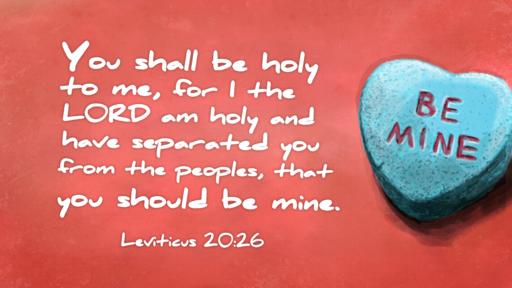
PURE LOVE BY THE SAINTS.

Everything comes from love, all is ordained for the salvation of man, God does nothing without this goal in mind.
–Saint Catherine of Siena

‘The person who loves God cannot help loving every man as himself, even though he is grieved by the passions of those who are not yet purified. But when they amend their lives, his delight is indescribable and knows no bounds. A soul filled with thoughts of sensual desire and hatred is unpurified. If we detect any trace of hatred in our hearts against any man whatsoever for committing any fault, we are utterly estranged from love for God, since love for God absolutely precludes us from hating any man.’
–St. Maximos the Confessor

“You learn to speak by speaking, to study by studying, to run by running, to work by working, and just so, you learn to love by loving. All those who think to learn in any other way deceive themselves.”
–St. Francis de Sales

“There is no place for selfishness—and no place for fear! Do not be afraid, then, when love makes demands. Do not be afraid when love requires sacrifice”
–Pope John Paul II

“We become what we love and who we love shapes what we become. If we love things, we become a thing. If we love nothing, we become nothing. Imitation is not a literal mimicking of Christ, rather it means becoming the image of the beloved, an image disclosed through transformation. This means we are to become vessels of God´s compassionate love for others. “
–St. Clare of Assisi

“We can cure physical diseases with medicine but the only cure for loneliness, despair, and hopelessness is love. There are many in the world who are dying for a piece of bread but there are many more who are dying for a little love. Let us not be satisfied with just giving money. Money is not enough, money can be got, but they need your hearts to love them. So spread love everywhere you go.”
–Blessed Mother Teresa of Calcutta

“The person who does not decide to love forever will find it very difficult to really love for even one day.”
–Pope John Paul II

Man cannot live without love. He remains a being that is incomprehensible for himself, his life is senseless, if love is not revealed to him, if he does not encounter love, if he does not experience it and make it his own, if he does not participate intimately in it. This is why Christ the Redeemer ‘fully reveals man to himself.'”
–Pope John Paul II

“Real love is demanding. I would fail in my mission if I did not tell you so. Love demands a personal commitment to the will of God.”
–Pope John Paul II

Always remember to love your neighbor; always prefer the one who tries your patience, who test your virtue, because with her you can always merit: suffering is Love; the Law is Love.
–Bl Mary of Jesus Crucified “The Little Arab”

A soul enkindled with love is a gentle, meek, humble, and patient soul.
–St John of the Cross, OCD

What we need most in order to make progress is to be silent before this great God with our appetite and with our tongue, for the language he best hears is silent love.  
–St John of the Cross, OCD
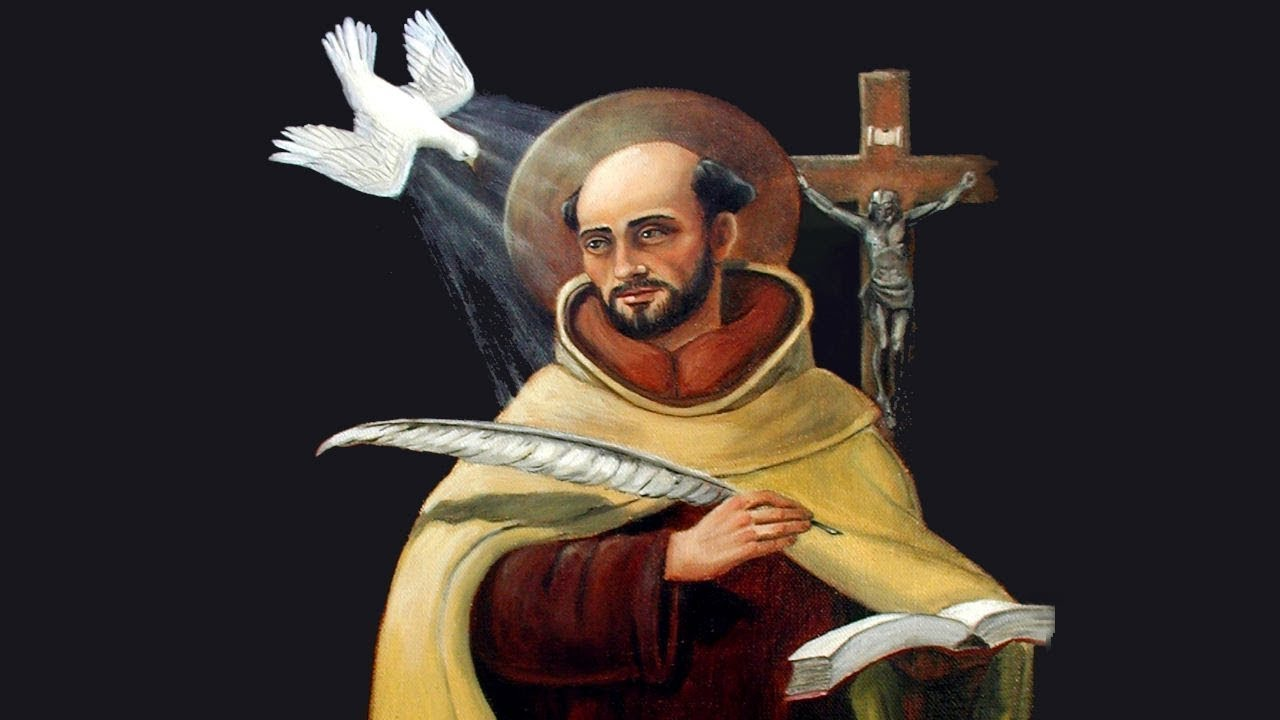

Saints on the Value of Suffering

Top 10 Saint Quotes on Redemptive Suffering for Comfort During Tough Times

If God gives you an abundant harvest of trials, it is a sign of great holiness which He desires you to attain. Do you want to become a great saint? Ask God to send you many sufferings. The flame of Divine Love never rises higher than when fed with the wood of the Cross, which the infinite charity of the Savior used to finish His sacrifice. All the pleasures of the world are nothing compared with the sweetness found in the gall and vinegar offered to Jesus Christ. That is, hard and painful things endured for Jesus Christ and with Jesus Christ.
–Saint Ignatius of Loyola

For my heart is always with Him, day and night it thinks unceasingly of its heavenly and divine Friend, to whom it wants to prove its affection. Also within it arises this desire: not to die, but to suffer long, to suffer for God, to give Him its life while praying for poor sinners.
–Bl Elizabeth of the Trinity

One day, I saw two roads. One was broad, covered with sand and flowers, full of joy, music and all sorts of pleasures. People walked along it, dancing and enjoying themselves. They reached the end of the road without realizing it. And at the end of the road there was a horrible precipice; that is, the abyss of hell. The souls fell blindly into it; as they walked, so they fell. And there numbers were so great that it was impossible to count them. And I saw the other road, or rather, a path, for it was narrow and strewn with thorns and rocks; and the people who walked along it had tears in their eyes, and all kinds of suffering befell them. Some fell down upon the rocks, but stood up immediately and went on. At the end of the road there was a magnificent garden filled with all sorts of happiness, and all these souls entered there. At the very first instant they forgot all their sufferings.”
–Diary of Saint Maria Faustina Kowalska, #153

I see around me a multitude of those who, blindly persevering in error, despise the true God; but I am a Christian nevertheless, and I follow the instruction of the Apostles. If this deserves chastisement, reward it; for I am determined to suffer every torture rather then become the slave of the devil. Others may do as they please since they are […] reckless of the future life, which is to be obtained only by sufferings. Scripture tells us that “narrow is the way that leads to life” […] because it is one of affliction and of persecutions suffered for the sake of justice; but it is wide enough for those who walk upon it, because their faith and the hope of an eternal reward make it so for them. […] On the contrary, the road of vice is in reality narrow, and it leads to an eternal precipice.”
–Saint Leo of Patara.

Our Lord and Savior lifted up his voice and said with incomparable majesty: “Let all men know that grace comes after tribulation. Let them know that without the burden of afflictions it is impossible to reach the height of grace. Let them know that the gifts of grace increase as the struggles increase. Let men take care not to stray and be deceived. This is the only true stairway to paradise, and without the cross they can find no road to climb to heaven.”

When I heard these words, a strong force came upon me and seemd to place me in the middle of a street, so that I might say in a loud voice to people of every age, sex and status: “Hear, O people; hear, O nations. I am warning you about the commandment of Christ by using words that came from his own lips: We cannot obtain grace unless we suffer afflictions. We must heap trouble upon trouble to attain a deep aprticipation in the divine nature, the glory of the sons of God and perfect happiness of soul.”

“If only mortals would learn how great it is to possess divine grace, how beautiful, how noble, how precious. How many riches it hides within itself, how many joys and delights! No one would complain about his cross or about troubles that may happen to him, if he would come to know the scales on which they are weighed when they are distributed to men.”

–from the writings of Saint Rose of Lima.

If you seek patience, you will find no better example than the cross. Great patience occurs in two ways: either when one patiently suffers much, or when one suffers things which one is able to avoid and yet does not avoid. Christ endured much on the cross, and did so patiently, because when he suffered he did not threaten; he was led like a sheep to the slaughter and he did not open his mouth.
–St. Thomas Aquinas

Saints quotes on suffering

Three Easy Steps To Holiness.

Sanctity is possible in this life and this world we found ourselves. Many thought holiness is impossible in this present highly immoral world and thus, concluded that we cannot become saints. As Christians and Catholics to be precise, we are taught that “holiness is our core vocation here on this passing world”. We are to live a holy and a perfect life as God. Our Blessed Lord gave us this command in the Gospel of St. Matthew “be perfect as your heavenly Father is perfect”. This command is for every Christian in any state of life.

Hence, it has become very imperative to make use of the means of sanctification offers to us by Christ through His Church in Sacraments and Prayers. These means are efficacious when approach with a disposition of Faith and Love. They communicate the very life of Christ into the soul that received, thus making the soul holy.

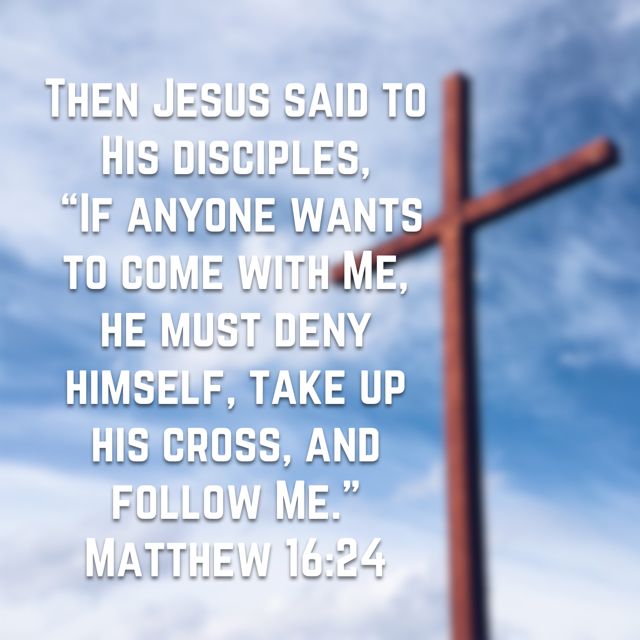
If a soul desire to be fully united with Christ in Holiness, that soul must listen to Eternal Word himself; “if anyone want to be a follower of mine, let him deny himself, carry his cross and follow me daily”. There is no other perfect steps to be a disciple, an apostle, or a servant of Jesus other than the ones He himself gave us. For a soul to partake in Christ’s holiness it must follow the steps below;


  1. Self denial.
  2. Bearing of the Cross.
  3. Following Christ.

    SELF DENIAL: The first step Our Lord demanded from a soul is to deny itself. The soul must deny itself from anything that is contrary to the will of God. The soul must put off the old self and put on the new self. The soul must cast its burden on Jesus’ Shoulder and receive an easy yoke of Christ. It must forsake its ways and choose the way of Christ. The soul must conquer its nature and put on Christ’s nature. Finally that soul should determined to no longer live for itself but for Christ. The soul must detach itself from worldliness and false self of pride.

BEARING OF THE CROSS: The second step consist in embracing the cross. Bearing all suffering with patience and joy, which are sent to the soul by Christ. Trials, Temptations, mortification and penances all are the crosses that the soul must bear with the grace of God. The only way to Christ is the way the cross. Walking the way of cross sanctify the soul. Virtues are perfectly fashioned out in this way. Any soul that neglects this step cannot perfectly follow Jesus. In love accept every cross and in patience bear it for the sanctification of your soul.

Pin by Amanda Farnum on The Catholic Gentleman | Saint quotes catholic,  Catholic quotes, Saint quotes

FOLLOWING CHRIST: One cannot follow a person one did not know. A soul seeking to follow Jesus must know him; know where Christ is heading to, and how to follow him in Christ’s terms. Christ is the anointed Messiah, the Lamb of God who atoned for the sins of humanity. He is the Saviour who offers salvation; eternal life promised to those who believed in Him. Following Christ lead to salvation. The soul that follows Jesus must know that ‘eternal life’ is the core motive to follow Jesus. To attain that eternal, the soul must be christlike. The soul should have the mind of Christ. The soul should direct its heart to Christ. In its affairs, the soul should let Christ lead and its Christ’s follower. That soul must have his eye and ear wide open enough to receive Christ’s guidance. His feet must be ready for direction that it will not miss its way to Christ.

In summary, guided by the Church, any soul that longs for perfection must deny itself, carry its cross and follow its Model in holiness. He Christ is holy and his followers must be holy.

Do you find this article helpful?

10 Catholic Saints’ Quotes That Can Change Your Christian Life.

Sometimes we felt the desire to change our christian life. We become tired of our normal christian life and want something deeper. I made a collection of Saintly quotes that might help you in this decision.

1

On the question of relating to our fellowman – our neighbor’s spiritual need transcends every commandment. Everything else we do is a means to an end. But love is an end already, since God is love.”

St. Teresia Benedicta (Edith Stein)

Readings & Reflections: Friday of the Eighteenth Week in Ordinary ...

2

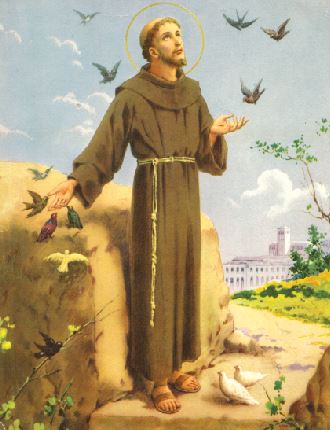
Lord, make me an instrument of your peace; where there is hatred, let me sow love; where there is injury, pardon; where there is doubt, faith; where there is despair, hope; where there is darkness, light; and where there is sadness, joy.

St. Francis
Prayer of Saint Francis of Assisi

3

“Give something, however small, to the one in need. For it is not small to one who has nothing. Neither is it small to God, if we have given what we could.”
-St. Gregory

Tonus Peregrinus: An excerpt from 'On Love of the Poor' by St ...

4

You cannot be half a saint; you must be a whole saint or no saint at all.”


-St. Therese of Lisieux
Love Quotes For Her: St Therese of Lisieux... - Quotess | Bringing ...

5

You must ask God to give you power to fight against the sin of pride which is your greatest enemy – the root of all that is evil, and the failure of all that is good. For God resists the proud.”
-St. Vincent de Paul

6

What is the mark of love for your neighbor? Not to seek what is for your benefit, but what is for the benefit of the one loved, both in body and in soul. St. Basil the Great.

7

In the life of the body a man is sometimes sick, and unless he takes medicine, he will die. Even so in the spiritual life a man is sick on account of sin. For that reason he needs medicine so that he may be restored to health; and this grace is bestowed in the SACRAMENT OF PENANCE. St. Thomas Aquinas.

8

Nothing can be more dangerous than keeping wicked companions. They communicate the infection of their vices to all who associate with them. St. John Baptiste de la Salle.

9

For there are three ways of performing an act of mercy: the merciful word, by forgiving and by comforting; secondly, if you can offer no word, then pray – that too is mercy; and thirdly, deeds of mercy. And when the Last Day comes, we shall be judged from this, and on this basis we shall receive the eternal verdict. ~ St Faustina

10

The usual snare with which the devil catches the young is to fill them with shame when they are about to confess their sins. When he pushes them to commit sins, he removes all shame, as if there were nothing wrong with it, but when they are going to confession, he returns that shame magnified and tries to convince them that the priest will be shocked by their sins and will no longer think well of them. Thus the devil tries to drive souls to the brink of eternal damnation. Oh, how many lads does Satan steal from God – sometimes forever – by this trick. ~ St. John Bosco.

St. John Bosco.

Finally,

Don’t imagine that, if you had a great deal of time, you would spend more of it in prayer. Get rid of that idea; it is no hindrance to prayer to spend your time well. 

Can Christians be able to Sanctify themselves?

Many Christians are found of asking this Question: How am I sanctify or how can I sanctify myself? It is a good question to ask if you are on your way to living a holy life. This question has been answered by Fr. De Caussade in his book Divine Abandonment.

How much more easily sanctity appears when regarded from this point of view.

1 Thessalonians 4:3-5 | Thessalonians, 1 thessalonians 4 ...
What is sanctification? What is the definition of Christian ...

If the work of our sanctification presents, apparently, the most insurmountable difficulties, it is because we do not know how to form a just idea of it. In reality sanctity can be reduced to one single practice, fidelity to the duties appointed by God. Now this fidelity is equally within each one’s power whether in its active practice, or passive exercise.

The active practice of fidelity consists in accomplishing the duties which devolve upon us whether imposed by the general laws of God and of the Church, or by the particular state that we may have embraced. Its passive exercise consists in the loving acceptance of all that God sends us at each moment.

5 Bible verses about Atonement, Sanctification By

Are either of these practices of sanctity above our strength? Certainly not the active fidelity, since the duties it imposes cease to be duties when we have no longer the power to fulfil them. If the state of your health does not permit you to go to Mass you are not obliged to go. The same rule holds good for all the precepts laid down; that is to say for all those which prescribe certain duties. Only those which forbid things evil in themselves are absolute, because it is never allowable to commit sin. Can there, then, be anything more reasonable?
What excuse can be made? Yet this is all that God requires of the soul for the work of its sanctification. He exacts it from both high and low, from the strong and the weak, in a word from all, always and everywhere. It is true then that He requires on our part only simple and easy things since it is only necessary to employ this simple method to attain to an eminent degree of sanctity. If, over and above the Commandments, He shows us the counsels as a more perfect aim, He always takes care to suit the practice of them to our position and character. He bestows on us, as the principal sign of our vocation to follow them, the attractions of grace which make them easy. He never impels anyone beyond his strength, nor in any way beyond his aptitude. Again, what could be more just? All you who strive after perfection and who are tempted to discouragement at the remembrance of what you have read in the lives of the saints, and of what certain pious books prescribe; O you who are appalled by the terrible ideas of perfection that you have formed for yourselves; it is for your consolation that God has willed me to write this. Learn that of which you seem to be ignorant.

27 Bible Verses about Holiness - DailyVerses.net

This God of all goodness has made those things easy which are common and necessary in the order of nature, such as breathing, eating, and sleeping. No less necessary in the supernatural order are love and fidelity, therefore it must needs be that the difficulty of acquiring them is by no means so great as is generally represented. Review your life. Is it not composed
of innumerable actions of very little importance? Well, God is quite satisfied with these.

They are the share that the soul must take in the work of its perfection. This is so clearly explained in Holy Scripture that there can be no doubt about it: “Fear God and keep the commandments, this is the whole duty of man” (Ecclesiastes xii, 13), that is to say—this is all that is required on the part of man, and it is in this that active fidelity consists. If man fulfils his part God will do the rest. Grace being bestowed only on this condition the marvels it effects are beyond the comprehension of man. For neither ear has heard nor eye seen, nor has it entered the mind what things God has planned in His omniscience, determined in His will, and carried out by His power in the souls given up entirely to Him. The passive part of sanctity is still more easy since it only consists in accepting that which we very often have no power to prevent, and in suffering lovingly, that is to say with sweetness and consolation, those things that too often cause weariness and disgust. Once more I repeat, in this consists sanctity. This is the grain of mustard seed which is the smallest of all the seeds, the fruits of which can neither be recognised nor gathered. It is the drachma of the Gospel, the treasure that none discover because they suppose it to be too far away to be sought. Do not ask me how this treasure can be found. It is no secret. The treasure is everywhere, it is offered to us at all times and wherever we may be. All creatures, both friends and enemies pour it out with prodigality, and it flows like a fountain through every faculty of body and soul even to the very centre of our hearts. If we open our mouths they will be filled. The divine activity permeates the whole universe, it pervades every creature; wherever they are it is there; it goes before them, with them, and it follows them; all they have to do is to let the waves bear them on.

A Spiritual Life for Our Full Sanctification (CP2 1&2 Thes)

Would to God that kings, and their ministers, princes of the Church and of the world, priests and soldiers, the peasantry and labourers, in a word, all men could know how very easy it would be for them to arrive at a high degree of sanctity. They would only have to fulfil the simple duties of Christianity and of their state of life; to embrace with submission the crosses belonging to that state, and to submit with faith and love to the designs of Providence in all those things that have to be done or suffered without going out of their way to seek occasions for themselves. This is the spirit by which the patriarchs and prophets were animated and sanctified before there were so many systems of so many masters of the spiritual life. This is the spirituality of all ages and of every state. No state of life can, assuredly, be sanctified in a more exalted manner, nor in a more wonderful and easy way than by the simple use of the means that God, the sovereign director of souls, gives them to do or to suffer at each moment.

Holiness, Consecration, Saint, Sanctification, Transformation ...

It would be a mistaken idea of the meaning of the author to imagine that he would urge anyone to undertake to lead a spiritual life without the guidance of a director. He explains expressly elsewhere that in order to be able to do without a director one must have been habitually and for a long time under direction. Less still does he endeavour to bring into disrepute the means made use of by the Church for the extirpation of vice and the acquisition of virtue. His meaning, of which Christians cannot be too often reminded, is, that of all direction the best is that of divine providence and that the most necessary and the most sanctifying of all practices is that of fulfilling faithfully and accepting lovingly whatever this paternal Providence ordains that we should do or suffer

Have you learn anything from this article?

Give me a comment below.

What Catholics Should do After Committing a Fault According to Fr. De Caussade.

Concerning our conduct after having committed faults, Fr. De Caussade has the following to propose;

Whoever conceals their sins does not prosper,
but the one who confesses and renounces them finds mercy.Proverbs 28:13 | NIV |

You, Lord, are forgiving and good,
abounding in love to all who call to you.Psalm 86:5 | NIV

First of All

Endure with humility before God the humiliation of your faults. After having been
unfaithful to grace and after accidental failings remember always that you are nothing and have a holy contempt of yourself. This is the great advantage that God allows us to gain even from our faults.

Secondly

Fear, especially if carried to excess after whatever fault you may have committed
proceeds from the devil. Instead of giving in to this dangerous illusion use every effort to repel it, and cast uneasiness away as you would cast a stone into the depths of the sea, and never dwell upon it voluntarily. However, should this feeling, by God’s permission be stronger than the will, then have recourse to the second remedy, which consists in allowing ourselves to be crucified in peace according as God permits and as the martyrs abandoned themselves to their tortures

 WHAT IS THIS SACRAMENT CALLED?

1423 It is called the sacrament of conversion because it makes sacramentally present Jesus’ call to conversion, the first step in returning to the Father from whom one has strayed by sin.

It is called the sacrament of Penance, since it consecrates the Christian sinner’s personal and ecclesial steps of conversion, penance, and satisfaction.

1424 It is called the sacrament of confession, since the disclosure or confession of sins to a priest is an essential element of this sacrament. In a profound sense it is also a “confession” – acknowledgment and praise – of the holiness of God and of his mercy toward sinful man.

It is called the sacrament of forgiveness, since by the priest’s sacramental absolution God grants the penitent “pardon and peace.”

It is called the sacrament of Reconciliation, because it imparts to the sinner the live of God who reconciles: “Be reconciled to God.”7 He who lives by God’s merciful love is ready to respond to the Lord’s call: “Go; first be reconciled to your brother.”

Catechism of Catholic Church.

Thirdly

What is said about the fears that go with conspicuous faults applies equally to that
feeling of uneasiness and distress which proceeds from constant little infidelities. This oppression of the heart is occasioned also by the devil. Despise and combat it as if it were a real temptation. Sometimes, however, God makes use of this anguish and excessive terror that certain souls suffer in order to purify them and make them die to themselves. If it is impossible to succeed in driving them away, the only remedy left is to endure this interior crucifixion peacefully in a spirit of absolute resignation to the divine will. This is the way to regain the peace and calm of a soul truly resigned to the will of God.

Finally

The fears roused about the recitation of the Office are nothing but a mere temptation because actual attention is not necessary. In order that prayer may have all its merit it is sufficient to make it with virtual attention which is nothing more than an intention to pray well formed before beginning, and this, no distraction even though voluntary can recall. So you can say the Office quite well while at the same time enduring continual involuntary distractions, as the trouble caused by these distractions is the best proof that the wish to pray well is heartfelt; it is also a sign that the wish is genuine. Therefore this wish makes the prayer a good and true prayer. Although hidden from the soul, on account of the trouble occasioned by these distractions the good intention, nevertheless, exists and is not hidden from the sight of God who gives us a double grace, first in hearing our prayers as He does all prayers rightly made, and then in concealing this from us in order that we may be mortified in everything, and on all occasions.

I hope are you Bless with this spiritual words.

The Duties of Each Moment.

The duties of each moment are the shadows beneath which hides the divine operation.

God reveals Himself to the humble under

the most lowly forms, but the proud, attaching themselves entirely to that which is extrinsic,

do not discover Him hidden beneath, and are sent empty away

from abandonment to the will of god

“The power of the most High shall over-shadow thee” (Luke i, 35), said the angel to
Mary. This shadow, beneath which is hidden the power of God for the purpose of bringing forth Jesus Christ in the soul, is the duty, the attraction, or the cross that is presented to us at each moment. These are, in fact, but shadows like those in the order of nature which, a veil, cover sensible objects and hide them from us.

Therefore in the moral and supernatural order the duties of each moment conceal, under the semblance of dark shadows, the truth of their divine character which alone should rivet the attention. It was in this light that Mary beheld them. Also these shadows diffused over her faculties, far from creating illusion, did but increase her faith in Him who is unchanging and unchangeable. The archangel may depart. He has delivered his message, and his moment has passed. Mary advances without ceasing, and is already far beyond him. The Holy Spirit, who comes to take possession of her under the shadow of the angel’s words, will never abandon her.

There are remarkably few extraordinary characteristics in the outward events of the life of the most holy Virgin, at least there are none recorded in holy Scripture. Her exterior life is represented as very ordinary and simple. She did and suffered the same things that anyone in a similar state of life might do or suffer. She goes to visit her cousin Elizabeth as her other relatives did. She took shelter in a stable in consequence of her poverty. She returned to Nazareth from whence she had been driven by the persecution of Herod, and lived there with Jesus and Joseph, supporting themselves by the work of their hands. It was in this way that the holy family gained their daily bread. But what a divine nourishment Mary and Joseph received from this daily bread for the strengthening of their faith! It is like a sacrament to sanctify all their moments.

What treasures of grace lie concealed in these moments filled, apparently, by the most ordinary events. That which is visible might happen to anyone, but the invisible, discerned by faith, is no less than God operating very great things. O Bread of Angels! heavenly manna! pearl of the Gospel! Sacrament of the present moment! thou givest God under as lowly a form as the manger, the hay, or the straw. And to whom dost thou give Him? “Esurientes implevit bonis” (Luke i, 53). God reveals Himself to the humble under the most lowly forms, but the proud, attaching themselves entirely to that which is extrinsic, do not discover Him hidden beneath, and are sent empty away

Conformity to the Will of God

Written in 1731 to Sister Marie-Thérèse de Voiménil, in the 9th year of her profession, and the 28th of her age.
For the attainment of perfect conformity to the will of God.

The way to holiness is not for lazy people.

Yakubu Simeon

First Key

At the beginning of each day, and of meditation, Mass, and Communion, declare to God that you desire to belong to Him entirely, and that you will devote yourself wholly to acquiring the spirit of prayer and of the interior life.

Second Key

Make it your chief study to conform yourself to the will of God even in the smallest things, saying in the midst of the most annoying contradictions and with the most alarming prospects for the future: “My God, I desire with all my heart to do Your holy will, I submit in all things and absolutely to Your good pleasure for time and eternity; and I wish to do this, Oh my God, for two reasons; first: because You are my Sovereign Lord and it is but just that Your will should be accomplished; secondly: because I am convinced by faith, and by experience that Your will is in all things as good and beneficent as it is just and adorable, while my own desires are always blind and corrupt; blind, because I know not what I ought to desire or to avoid; corrupt, because I nearly always long for what would do me harm.
Therefore, from henceforth, I renounce my own will to follow Yours in all things; dispose of me, Oh my God, according to Your good will

Third Key

This continual practice of submission will preserve that interior peace which is the foundation of the spiritual life, and will prevent you from worrying about your faults and failings. You will put up with them instead, with a humble and quiet submission which is more likely to cure them than an uneasy distress, only calculated to weaken and discourage you.

Fourth Key

Think no more about the past but only of the present and future. Do not trouble about your confessions, but accuse yourself simply of those faults you can remember after seven or eight minutes examen. It is a good thing to add to the accusation a more serious sin of your past life. This will cause you to make a more fervent act of contrition and dispose you to receive more abundantly the grace of the Sacrament. You should not make too many efforts to get rid of the obstacles which make frequent confession disagreeable to you.

Fifth Key

To escape the distress caused by regret for the past or fear about the future, this is the rule to follow: leave the past to the infinite mercy of God, the future to His good Providence, give the present wholly to His love by being faithful to His grace.

Sixth Key

When God in His goodness sends you some disappointment, one of those trials that used to annoy you so much; before all thank Him for it as for a great favour all the more useful for the great work of your perfection in that it completely overturns the work of the moment.

Seventh Key

Try, in spite of interior dislike, to show a kind face to troublesome people, or to
those who come to chatter about their troubles; leave at once prayer, reading, choir office, in fact anything, to go where Providence calls you; and do what is asked of you quietly, peacefully, without hurry, and without vexation.

Eighth Key

Should you fail in any of these points, make immediately an act of interior humility—not that sort of humility full of uneasiness and irritation against which St. Francis of Sales said so much, but a humility that is gentle, peaceful, and sweet. This is a matter essential for overcoming your self-will, and to prevent you becoming a slave to your exterior or interior

Ninth Key

We must understand that we can never acquire true conformity to the will of God until we are perfectly resolved to serve Him according to His will and pleasure and not to please ourselves. In everything look to God, and you will find Him everywhere, but more especially where you have most completely renounced yourself. When you are thoroughly convinced that of yourself you are incapable of doing any good, you will give up making resolutions but will humbly confess to God: “My God, I acknowledge after many trials that all my resolutions are useless. Doubtless I have hitherto depended too much on myself, but You have abased me. You alone can do all things; make me then, do such and such a thing, and give me, when necessary, the recollection, energy and strength of will that I require.
Without this, I know from my former sad experiences, I shall never do anything.

Tenth Key.

To this humble prayer add the practice of begging pardon at once or as soon as possible of all those who witnessed any of your little impetuosities or outbursts of temper. It is most important for you to practise these counsels for two reasons: first, because God desires to do everything in you Himself; secondly, on account of a secret presumption, which, even in the midst of so many miseries, prevents you referring everything to God, until you have experienced a thousand times how absolutely incapable you are of performing any good. When you become thoroughly convinced of this truth you will exclaim almost without reflexion, when you act rightly, “Oh my God it is You who do this in me by your grace.” And when You do wrong: “This is just like me! I see myself as I am.” Then will God be glorified in all your actions, because He will be proved to be the sole author of all that is good. This is your path; all the misery and humiliation you must take on yourself, and render to God the glory and thanks that are His due. All the glory to Him, but all the profit to you. You would be very foolish not to accept with gratitude a share so just and so advantageous.

The Secret of perseverance is Prayer:

From reading the lives of Saints, one would conclude that they fall, roughly into two classes: those who gave themselves to contemplation, and those who spent their lives in active works.

In reality they were alike. All were souls whose whole lives were prayer as their business. There good deeds were only valuable because they sprang from prayer; they bore the same relation to prayer that the trunk of a tree bears to the roots; good deeds are visible part of prayer; and goods cannot live without prayer.

The present is a period when successful appeal is being made to Catholics to show works of charity, the Faith that is in them. That the most ordinary act may become holy when inspired by a holy intention is well understood and the words of Christ Himself, assuring us that “Just as you did it to one of the least of these who are members of my family you did it to me.” draws powerfully on to the service of our neighbour.

The possibilities of holiness here are immense.

But it is not sufficiently recognized that a proper balance of regular prayer and good works s essentiall to perseverance in the latter. There is a tendency to consider good works as prayerfully enough in themselves. Their variety makes them easy, while prayer is difficult. Besides, we reduce our prayers to little or nothing, satisfying ourselves with the recollection that we are doing plenty of particular work for our neighbour.

Readers of Canon Sheehan will remember how a similar course of reasoning ended in the case of Luke Delmege in complete loss of spirituality and in disaster.

Of course, this is an extreme case. But we all know of many noble qualities, holy intentions, and high promise, who just reach a certain point and no further. In a way, these makings of Saints who give up advancing are most to be pitied. It is far easier to pick a sinner out of the mire than to induce such people to get out of the rut of mere goodness, which God never intended for them.

Let us sound once more the note upon which we bagan a little while ago. The cause of all this pitiful failure is this: there is not prayer enough.

Prayer! Prayer! Prayer!

St Theresa

This is how St. Theresa stated she would summarize all teachings.

People do not understand the importance of prayer. They say it is difficult. What wonder, considering that they make no effort to learn. The man who thinks it quite natural to put his son to a six years’ apprenticeship to learn a trade, would think it absurd to spend six hours reading a book which might teach him how to pray.

Prayer must be brought to occupy a most prominent and definite place in our lives.

This does not mean that we have to spend many hours each day on our knees. The duties of our state probably prevent that. But certainly we must aim at more than the saying of prayers twice a day, or even three or four times a day.

He prays little who only prays on his knees:

Just as a gong or a turning-fork could be kept quietly sounding all day by an occasional tap, so will the soul of itself and up incessant prayer, if now and then we apply the tap of an aspiration, a thought, an ejaculation. Never let the mind be too long away from God. The great disinclination to pray which most of us feel when the time set apart for prayer comes is plain proof that we are not, as it were, living with Him.

Remedies Against Sins.

Before entering upon this subject, bear in mind that there ; are two principles in which you must be firmly established if you would change your life and give yourself to God. The first is a just appreciation of the importance of the labor you ; are about to undertake; you must be convinced that this is the sole interest, the sole pro it, the sole wisdom in the world. This is what the Holy Ghost Himself teaches us:

“Learn where is wisdom, where is strength, where is understanding, that thou mayst know also where is length of days and life, where is the light of the eyes, and peace.”(Bar. 3:14).

“Let not the wise man glory in his wisdom, and let not the strong man glory in his strength, and let not the rich man glory in his riches; but let him that glorieth glory in this, that he understandeth and knoweth me.” (Jer. 9:23‐24).

The second principle with which you must be imbued is that as this is such a glorious and profitable engagement, you must undertake it with vigor and a firm determination to conquer. Be persuaded that all the dangers which you will encounter will be of little moment compared to the sublime end you have in view. It is a law of nature that nothing great is accomplished without labor and trouble, You will no sooner have resolved to give yourself to God than Hell will send out its forces against you. The flesh, corrupted from its birth by the poison of the serpent, will assail you with its insatiable desires and alluring pleasures. Evil habits as strong as nature itself will fiercely resist this change of life and exaggerate the difficulties which you will encounter.

To turn a river from its course is hardly more laborious than to change a life confirmed by inveterate habits. The world, as powerful as it is cruel, will wage a fierce war against you. Armed with its pleasures and bad examples, it will hasten to compass your downfall. At one time it will seek to captivate your heart with its pomps and vanities. At another time it will strive to entangle you in the net of its ways and maxims. Again it will boldly attack you with ridicule, raillery, and persecution. The devil himself, the arch‐deceiver, will renew his warfare and turn all his forces against you. Enraged at your desertion from his party, he will leave nothing undone to ruin you.

Be prepared, therefore, to meet with difficulties. Remember the words of the Wise Man:

“Son, when thou comest to the service of God, stand in justice and in fear, and prepare thy soul for temptation.” (Ecclus. 2:1).

Do not think you are called to enjoyment alone. You must struggle and combat; for, notwithstanding the abundant succor which is offered to us, we must expect hard labor and difficulties in the beginning of our conversion. That you may not be discouraged, bear in mind that the prize for which you are striving is worth more than all you can ever give to purchase it. Remember that you have powerful defenders ever near you. Against the assaults of corrupt nature you have God’s grace. Against the snares of the devil you have the almighty power of God. Against the allurements of evil habits you have the force of good habits confirmed by grace. Against a multitude of evil spirits you have numberless angels of light. Against the bad example and persecutions of the world you have the good example and strengthening exhortations of the saints. Against the sinful pleasures and vain joys of the world you have the pure joys and ineffable consolations of the Holy Ghost. Is it not evident that all that are for you are stronger than all that are against you? Is not God stronger than the devil? Is not grace superior to nature? Are not the good angels more powerful than the fallen legions of Satan? Are not the pure and ineffable joys of the soul far more delightful than the gross pleasures of sense and the vain amusements of the world? Resting on these two principles, your first determination must be a deep and unshaken resolution never to commit mortal sin, for it can only rob us of the grace and friendship of God. Such a resolution is the basis of a virtuous life. As long as the soul perseveres in it she possesses divine charity, which makes her a child of God, a member of Christ, a temple of the Holy Ghost, and gives her a right to the blessings of the Church here and the kingdom of Heaven hereafter.

FROM SINNERS’S GUIDES

More to come…………………..

Design a site like this with WordPress.com
Get started